Guides Your First Live Sessions
Live Poker Etiquette, and Why Each Rule Exists
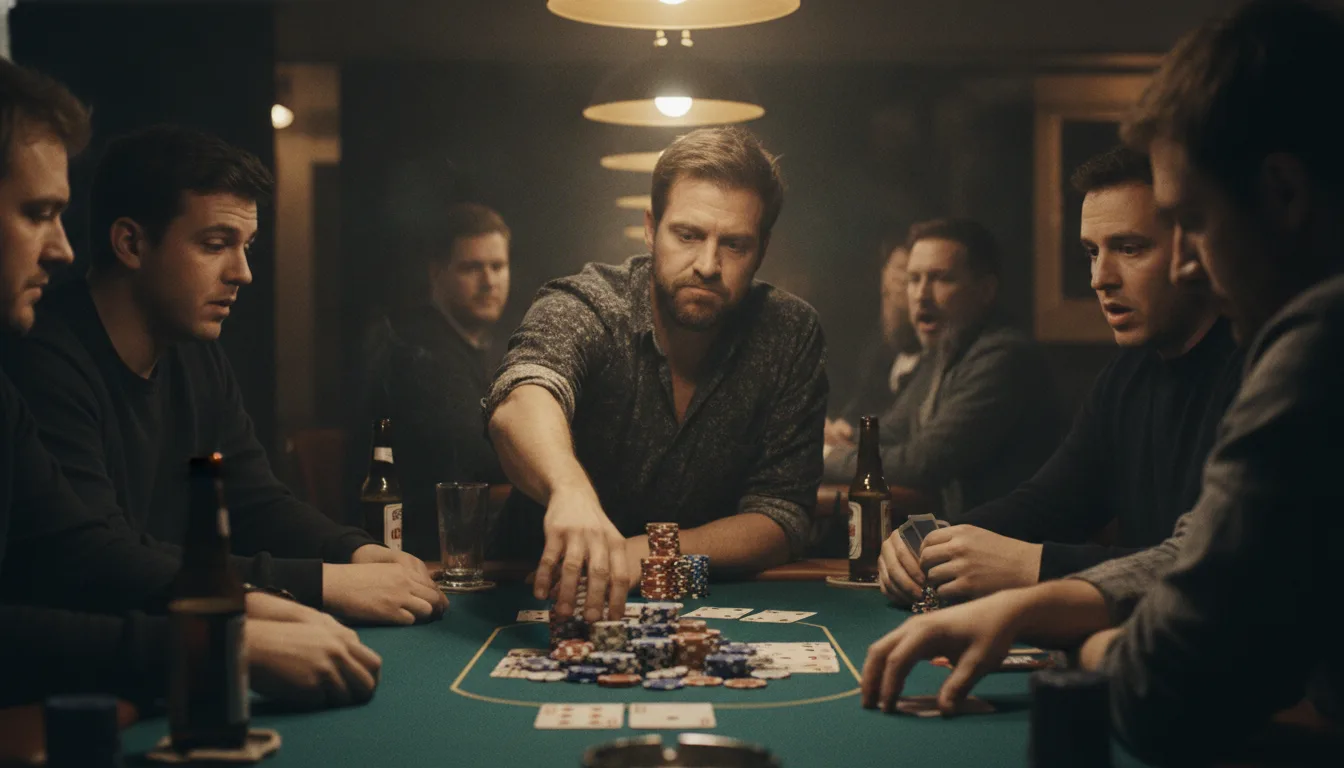
Poker etiquette gets taught by correction, which is a bad way to learn anything. Most of it is not manners for their own sake: each rule exists because breaking it gives somebody information or money they did not earn. Here is the list, with the reason attached.
Act in Turn, Always
Folding out of turn is the expensive one. If you muck before the player to your right has acted, you have told him that one fewer player is behind him, which changes what he can profitably do. It costs him nothing and it can cost the table a pot. The same applies to reaching for chips early: the player acting in front of you sees it and adjusts.
The fix is simple and it is a habit, not a skill. Decide when the action reaches you, not before. If you know you are folding, keep your cards where they are until it is your turn.
Announce Before You Move Chips
Say "raise" before your hand leaves the rail. What you say binds, and a single forward motion with chips is a call unless you declared otherwise. Silent multi-motion betting is what creates string-bet rulings, and a string bet gets cut back to the first motion. The mechanics are in the rules guide.
Protect Your Hand
Put a chip on your cards. Dealers muck hands by accident, players toss cards that land on yours, and a hand that touches the muck is dead even when everyone agrees it was an accident. The card cap is insurance that costs one chip.
Do Not Talk About a Hand You Are Not In
This is the rule people break most and notice least. Saying "wow" at a flop, reacting to a card, or discussing what somebody might have while two players are still deciding gives away information you have no right to give. One player at the table can hear a tone and price a call off it.
The rule is absolute in a raked cash game: if you folded, you are furniture until the pot is pushed.
The flip side is the read you can take from someone else breaking it. A player who reacts to the board, sighs at a turn card, or asks the dealer a question mid-hand is producing information for free. That is exactly the material the Player Observation drill asks you to sort: what is signal about this hand, and what is just how this guy always is.
Show One, Show All
If you show your cards to one player, the dealer will show them to the table on request. Flashing a bluff to your neighbor is a table-wide announcement. Decide whether you want everyone to have that information before you tilt your cards.
Slowrolling
Taking a long time to turn over the winner when you know you have it is the one genuine offense in poker. Nobody will report you and everybody will remember. Tanking with a real decision is fine and expected. Tanking with the nuts after your opponent has tabled his hand is not.
Tipping, Rake and the Economics of the Room
Dealers work for tips. The convention in most American rooms is a dollar or two per pot you win, more on a large one, nothing on a pot you chop or a pot that never developed. Nobody will say anything if you do not, and the dealers will know exactly who you are.
The rake itself is the room's cut, usually about 10 percent of the pot capped at $5 to $7, plus a small jackpot drop in some rooms. Check yours, because a high rake at $1/2 is a real cost that changes which marginal hands are worth playing. The rake comes out of every pot you win, which means small pots you win with weak hands are worth less than the chip count suggests.
Pace, Phones and the Things That Annoy a Table
- Play at a reasonable speed. Tanking every decision for thirty seconds costs everyone hands, including you, and at $1/2 it rarely buys a better decision.
- Keep the phone off the table. Most rooms have a rule about it in a live hand, and all of them have players who will call the floor.
- Do not berate a bad player. He is the reason the game is good. The player explaining how badly someone played is doing the table a service and himself harm.
- Stack your chips visibly. Hiding high denominations behind low ones is against the rules in most rooms and reads as angle-shooting even where it is not.
- Say your action clearly enough that the dealer hears it. Half the string-bet arguments in poker start with a mumbled "raise."
What None of This Is
Etiquette is not a personality requirement. You do not have to talk, you do not have to be friendly, and a quiet player who acts in turn and tips the dealer is a perfectly welcome table presence. The social part of the game is optional. The information part is not.
Questions People Ask About This
How much do you tip a poker dealer?
A dollar or two on most pots you win, and more on a large one, is the American cash-game convention. Nothing on a chopped pot or a pot that ends preflop.
Is it rude to talk during a poker hand?
If you are not in the hand, yes, and in most rooms it is against the rules. Anything you say while two players are deciding can give one of them information the other does not have.
What is slowrolling in poker?
Deliberately taking a long time to reveal a winning hand after your opponent has shown theirs. It is the one breach that most players treat as genuinely offensive.