Guides Reading the Player, Not the Hand
Timing Tells at Low Stakes
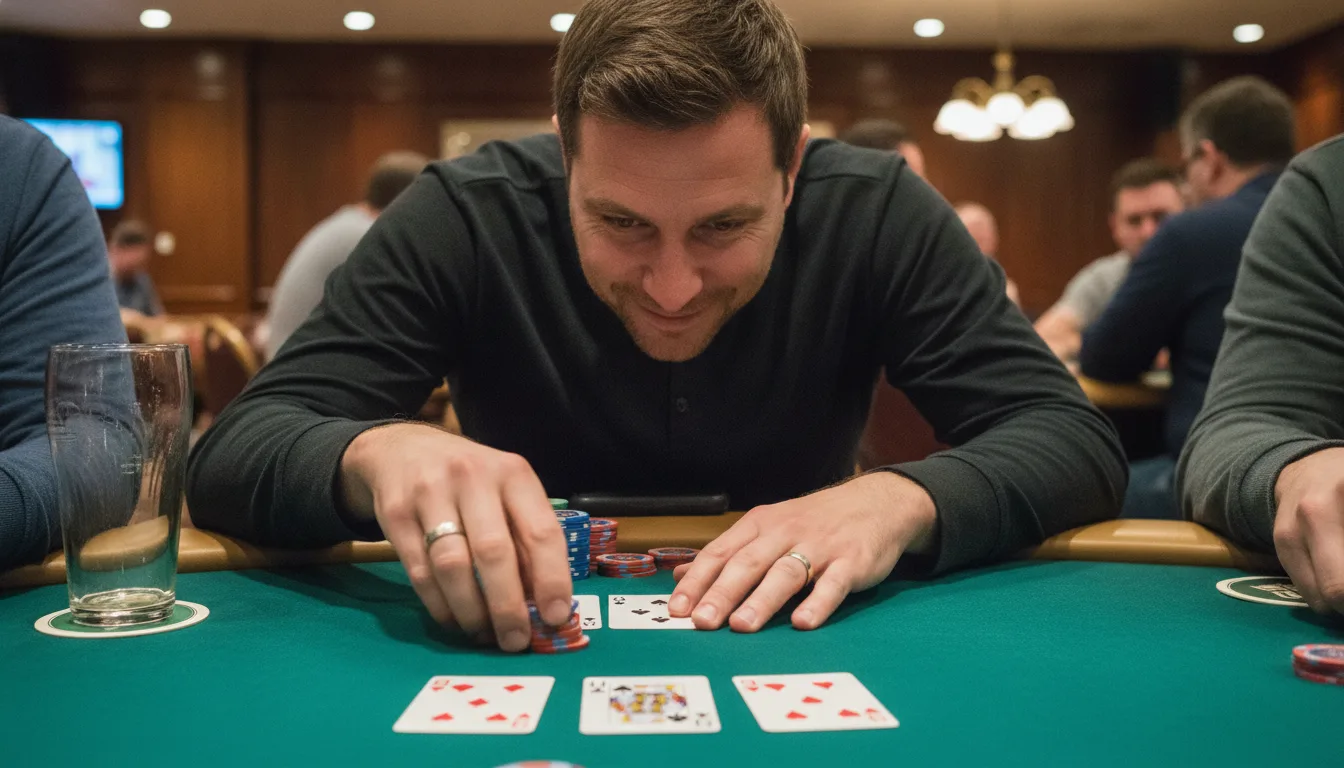
Timing is the most reliable physical information at a low-stakes table, because it is the hardest thing to fake consistently and the easiest thing to measure. It is also the tell most often read backwards.
Why Tempo Outperforms Faces
A player controlling his face is controlling one thing. A player controlling his tempo has to control it in every spot, across four hours, while making actual decisions. Almost nobody at $1/2 is doing that, and the ones who are usually overshoot into a different pattern that is equally readable.
Tempo is also measurable. You can count. Faces require interpretation, and interpretation is where players talk themselves into whatever they wanted to believe.
The Instant Call
An immediate call usually means a hand that is good enough to continue and not good enough to raise. Draws, weak pairs, second pair. The speed comes from the fact that there was no decision to make: raising was never on the table and folding never crossed his mind.
The practical use is on the next street. An instant caller who then faces a large turn bet folds far more often than a player who took time, because the instant call was made by a hand that has a ceiling.
The Long Pause, Then the Big Bet
At low stakes this is a value hand more often than not. The pause is a decision about sizing, not about whether to bet. Players with nothing tend to fire quickly, because they decided to bluff before the action reached them and they do not want to look uncertain.
The exception is the player who has learned that pausing looks strong, and pauses on purpose with air. He exists. He is also rare at $1/2, and he gives himself away by pausing the same length of time every single time, which is a baseline rather than a deviation. The baseline guide covers the distinction.
Every one of these patterns inverts against the wrong opponent, which is why the Player Observation drill asks what is worth logging rather than what the tell means. The read is the deviation from the person, not the behavior in the abstract.
The Delayed Check
A player who takes several seconds and then checks is usually deciding between checking and betting, which means he has something. The genuinely weak hand checks fast, because checking was the only option it ever had.
This one is useful because it tells you when a free card is not actually free. A delayed check often precedes a check-raise, and a bet into it is walking into a hand that already decided to continue.
The Tank and the Announcement
Long tanks facing a bet mean a genuinely close decision, which usually means a medium hand. Players with the nuts do not tank facing a bet, they tank deciding how much to make. Players with nothing fold quickly.
Watch what happens after the tank, not just the tank. A tank ending in a call is a marginal hand that will fold to further pressure. A tank ending in a raise is very often the top of the range, because the length of time was spent talking himself into maximizing.
What Noise Looks Like
- Anyone on a phone. Every timing read on a distracted player is void. He is slow because he is reading a text.
- The first hand after a big pot. Tempo goes strange for a few hands after someone gets stacked or doubles.
- A player who just sat down. No baseline, no read.
- The dealer change and the food arriving. Both reset the table rhythm for an orbit.
Your Own Tempo
The cheapest improvement available to a live player: take the same amount of time on every decision. Three seconds, always, including when you are folding seven-deuce and including when you flop the nuts. It costs you nothing, it removes the single largest leak in your own information, and it is the only tell defense that works without any acting.
The players who need this most are the ones who snap-check with air and pause with strength, which is the natural, unexamined pattern for almost everybody.
Questions People Ask About This
What does an instant call mean in poker?
Usually a hand that is good enough to continue but not good enough to raise, such as a draw or a weak pair. The speed comes from there being no real decision to make.
Does a long pause before a bet mean weakness?
At low stakes it more often means strength, because the pause is about sizing rather than about whether to bet. Bluffs tend to be fired quickly.
How do I stop giving off timing tells?
Take the same amount of time on every decision, including folds and monsters. A consistent three-second pause removes almost all of your own timing information.