Live Tells That Actually Hold Up.
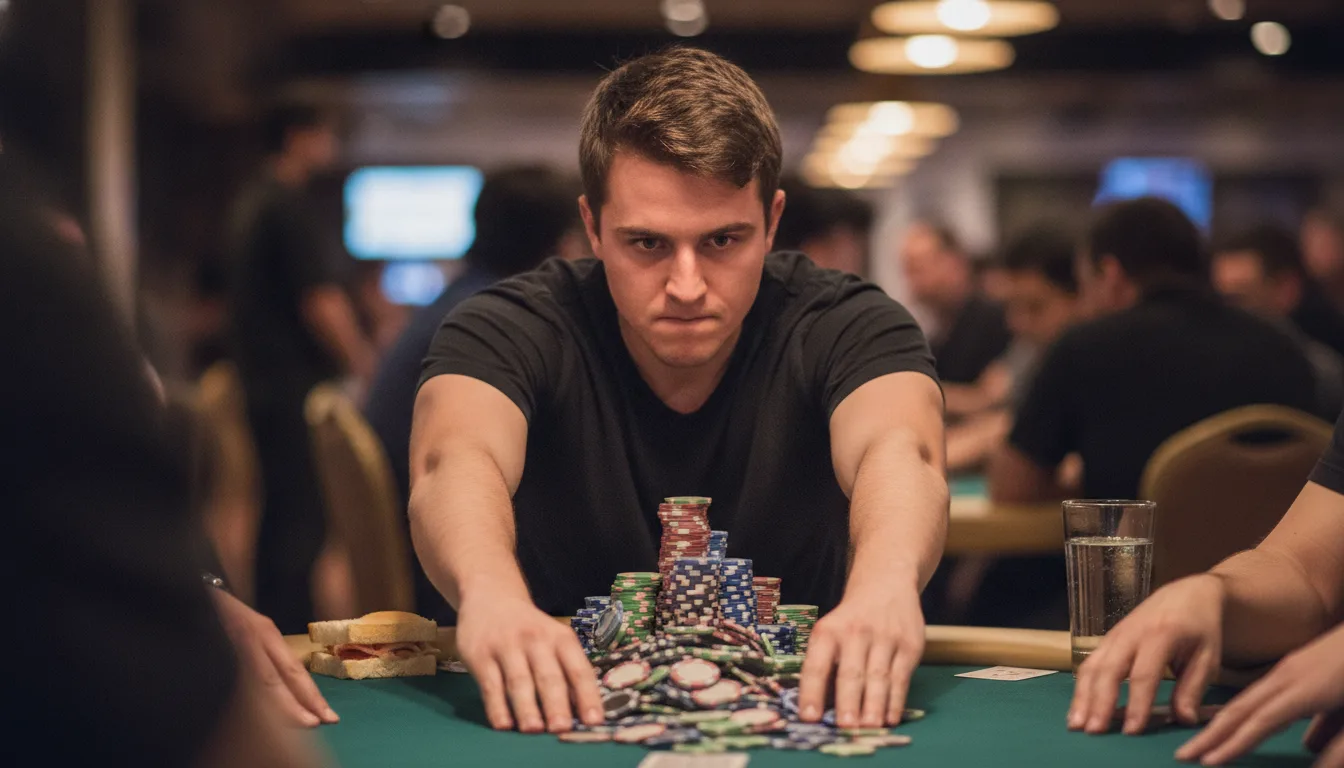
Most tell "knowledge" is folklore — shaky science recycled from movies, useless at a real table. But a handful of physical patterns show up so consistently at live low stakes that ignoring them is leaving money on the felt. The filter for every tell on this list: it has to be involuntary, common, and expensive to fake.
The Master Key: Strong Means Weak
The single most reliable frame in live poker. Recreational players act out the OPPOSITE of their hand strength, because they're trying to influence you. The forceful two-handed shove with a hard stare is a performance of strength — and performances exist to make you fold. The quiet single chip slid forward with a shrug is comfort — a hand that wants your call and doesn't need theater to get it.
At the Table: when the bet's presentation is loud, downgrade the hand. When it's casual to the point of boredom, upgrade it.
The Seven That Survive
- The One-Chip All-In. Relaxed lean-back, chin up, single chip tossed in to announce the bet. Almost always a monster. Bluffers don't lounge.
- The Statue Freeze. After a big bet: breath held, hands withdrawn, eyes locked on the felt. Bluffers minimize everything to avoid "giving it away" — and the suppression is the giveaway. Value bettors keep breathing.
- Trembling Hands. Shaking while sliding out a big bet is adrenaline, not fear — and adrenaline spikes when the pot is about to be won. One of the most reliable strength tells there is. Fear freezes; excitement shakes.
- The Re-Check. Glancing back at hole cards when the third heart lands ("do I have the ace of hearts?") plus fast chip riffling = a draw, not a made hand. Made hands don't need to look.
- Rehearsed Boredom. Instant disinterest after checking cards — but a chip protector goes on top. Nobody guards a hand they're folding. Bored face, protected cards, real hand.
- The Stack Glance. Mid-hand, he peeks at his own chips. He's planning future bets — which means the hand needs improving or he's sizing a value attack. Paired with splashy chatter, it leans draw.
- The Insta-Bet River. The bet arrives before the river card finishes landing. That's a pre-decided action — "if I miss, bet fast so it looks strong." Genuine value takes a beat to pick the number that gets paid.
How to Actually Use Them
Tells are tie-breakers, not oracles. The order of operations at a live table is: profile first (who is this person?), sizing and tempo second (what did the bet say?), body third (what did the hands and posture add?). A statue freeze from a player who's been statue-freezing with the nuts all night means nothing. The same freeze from a chatty tourist who suddenly went quiet is a siren.
And one warning: regs know these tells too. Against the backpack-and-headphones crowd, physical reads degrade fast — which is fine, because you shouldn't be at their table anyway. (That's the table selection guide.)
Drill It: the Player Observation & Baselines drill shows you a player mid-action, tells you what that same player has done before, and asks the only question you can answer in the moment: is this a deviation, a baseline, or noise? It grades what you write down, not what you guess he holds, because the label comes from the showdown.